Aliens Confirmed
Maybe?

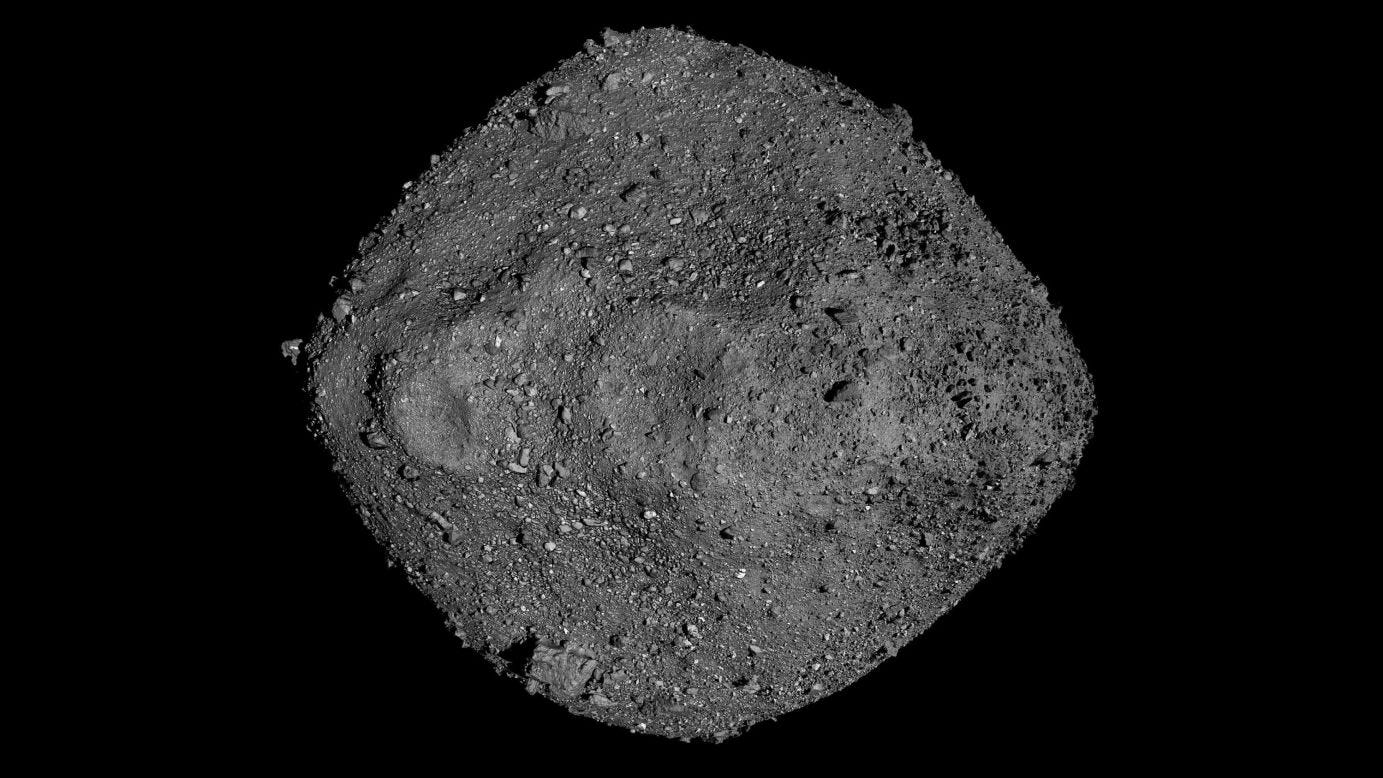
In 2020, NASA scientists sent a spacecraft 63 million kilometers away to the asteroid Bennu as part of their OSIRIS-REx mission, collecting samples that could indicate the presence of life.
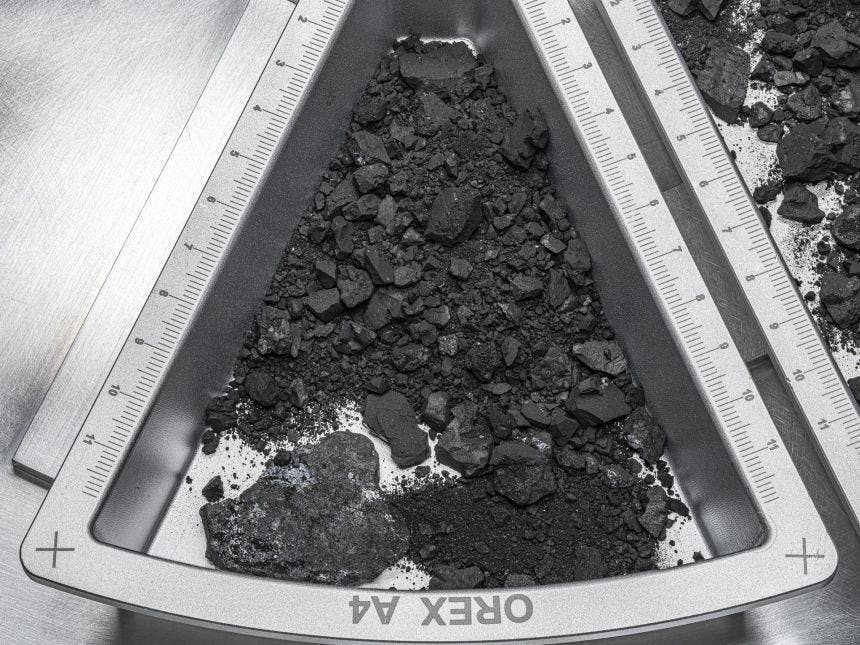
The samples from Bennu, an asteroid orbiting the Sun between Mars and Jupiter, were returned to Earth in 2023. Since then, the 121 grams collected have been distributed to laboratories across the globe for analysis, allowing specialists from various fields to contribute to the detection of any hints of sample origin or biological compounds.
From the initial studies in 2023, it was revealed that Bennu was extremely rich in molecules such as water, carbon, and other organic molecules, already indicating a promising setup for life.
Then came the detection of 14 of the 20 amino acids that life on Earth uses to synthesize proteins, coupled with the discovery of all five nucleobases: adenine, thymine, cytosine, guanine, and uracil. The nucleobases are used to store and signal genetic instructions in molecules such as DNA and RNA. These instructions include those that tell how to arrange amino acids into proteins.
Among the amino acids discovered was tryptophan, the essential amino acid that is responsible for the myth that eating turkey on Thanksgiving makes you sleepy. Although tryptophan can cause the release of melatonin, the sleepy hormone, you would need to have over half of a turkey in a sitting for it to begin to have an effect. Most of the time, feeling sleepy after a big meal is the result of sleep debt from the days prior or the blood flow going towards your digestive system and away from your head, causing tiredness.
In addition, scientists found high amounts of ammonia in the Bennu samples. This is important because ammonia reacts with formaldehyde, also found in the samples, to form complex molecules, such as the discovered amino acids.
To top off all of these initial discoveries, Bennu’s surface is dominated by clay minerals, specifically serpentine. Serpentine almost exactly mirrors the rock found at mid-ocean ridges on Earth, where the gooey mantle rock tangos with the ocean water.
This rock creation creates carbonates, iron oxides, and iron sulfides, all seen on Bennu. But most importantly, Bennu also has the presence of water-soluble phosphates, the components of all life on Earth today. It is more likely that Bennu had life on it than did not.
The New Information
Previously, scientists had discovered the nucleobases essential for life, but a key component was still missing. Now, earlier this month, Yoshihiro Furukawa, lead of the study, and his team from Tohoku University in Japan, placed the last piece of the puzzle.
They mixed the samples with acid and water, separating the components of the rock. This revealed the presence of essential sugars, something that had been missing before. They are ribose, xylose, arabinose, glucose, and galactose, but not deoxyribose. If ribose sounds familiar, it’s because ribose is the namesake and backbone of RNA (Ribonucleic Acid). Although deoxyribose, the building block of DNA, was not found, RNA still performs many crucial functions of life, and all life would not exist without it. RNA could be more widespread as the simplest block of life throughout the universe.
“This is a new finding of sugars in extraterrestrial materials,” says Furukawa, who adds that almost all life relies on glucose in its metabolism.
Bennu is theorized to have come from a much larger parent asteroid. Scientists believe that the sugars formed there because of the presence of briny salt fluids, key to creating complex organics.
Furukawa has previously found ribose and some of the other sugars in meteorites found on Earth, but the discoveries have always been hindered by the worry that the rocks were contaminated after reaching Earth. Now, the finding confirms that asteroids really could have delivered the ingredients of life to Earth. The findings also support the theory that RNA is the origin of life because ribose was found, and deoxyribose was not.
Two more papers* from the NASA Ames Research Center and NASA’s Johnson Space Center in Houston find a gum-like substance, never before seen on anything from space, as well as supernova dust that predates our solar system. *
Whether it’s confirming life or understanding the universe billions of years ago, Bennu is extraordinary and contains many secrets for us to discover.
*(READ MORE BELOW)
Sources:
https://www.nasa.gov/missions/osiris-rex/sugars-gum-stardust-found-in-nasas-asteroid-bennu-samples/
https://www.nasa.gov/news-release/nasas-asteroid-bennu-sample-reveals-mix-of-lifes-ingredients/
https://www.cnn.com/2025/11/27/science/tryptophan-asteroid-bennu-nasa-sample
https://science.nasa.gov/solar-system/asteroids/101955-bennu/facts/